
 Türkçe
  English
  Русский
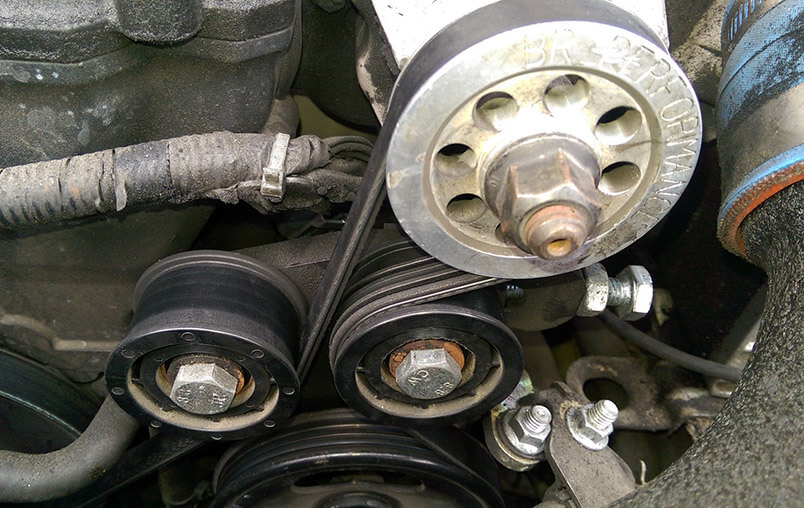
The crankshaft pulley is an important component that transfers the engine’s rotational movement to auxiliary systems and helps control engine vibrations.
1. How Can You Identify a Crankshaft Pulley Failure?
The crankshaft pulley is an important component that transfers the engine’s rotational movement to auxiliary systems and helps control engine vibrations. Because it operates continuously under high rotational speeds, heat, and vibration, it may wear out or become structurally damaged over time.
Early detection of a crankshaft pulley failure is essential for protecting the belt system, alternator, air-conditioning compressor, water pump, and other components around the engine. Ignoring the warning signs may lead to more serious and costly mechanical problems.
Common Signs of Crankshaft Pulley Failure
- Rattling, rubbing, or knocking noises from the engine compartment.
- Wobbling or irregular movement of the pulley during rotation.
- More engine vibration than normal.
- Irregular movement or slipping of the auxiliary drive belt.
- Cracking, separation, or damage in the rubber damping section.
- A smell of burnt rubber from the engine compartment.
2. Unusual Noises from the Engine Compartment
One of the most common signs of crankshaft pulley failure is unusual noise from the engine compartment. Deformation in the pulley connections, rubber damping section, or belt grooves may cause rattling, rubbing, knocking, or metallic sounds.
These noises may become more noticeable when the engine is first started, while idling, when the air-conditioning system is activated, or when engine speed increases. Since such noises may also originate from other components, the system should be inspected by a qualified technician.
Noises That Require Attention
- Rattling noise: May indicate looseness or connection problems.
- Rubbing noise: May indicate that the pulley is misaligned.
- Knocking noise: May result from separation between the rubber and metal sections.
- Belt noise: May indicate that the belt is not moving correctly through the grooves.
3. Wobbling and Irregular Rotation of the Crankshaft Pulley
A properly functioning crankshaft pulley should rotate smoothly and evenly while the engine is running. Side-to-side movement, shaking, or visible wobbling during rotation is an important sign of failure.
Wobbling may be caused by pulley deformation, damage to the central connection, separation of the rubber damping section, or incorrect installation. This condition may cause improper belt operation and damage to connected components.
Problems Caused by Pulley Wobbling
- The belt may come out of its grooves.
- Premature belt wear and cracking.
- Reduced alternator and air-conditioning compressor performance.
- Increased engine vibration.
- Damage to components located around the pulley.
4. Damage to the Rubber Damping Section
Vibration-damping crankshaft pulleys contain a special rubber section between the inner and outer metal components. This section helps absorb torsional vibrations generated during engine operation.
Over time, exposure to high temperatures, oil, environmental conditions, and continuous vibration may cause the rubber section to harden, crack, or separate. Damage to the rubber structure prevents the pulley from performing its vibration-control function effectively.
Common Problems in the Rubber Section
- Fine or deep surface cracks.
- Separation between the rubber and metal components.
- The rubber section protruding outward.
- Signs of fragmentation or tearing.
- Deterioration caused by oil or chemical exposure.
5. What Happens If a Faulty Crankshaft Pulley Is Not Replaced?
Continuing to use a faulty crankshaft pulley may not only cause complete pulley failure but may also disable the auxiliary systems driven by the belt.
If the belt breaks or comes off, the alternator, water pump, air-conditioning compressor, and in some vehicles the power steering system may stop working. A stopped water pump may cause the engine to overheat, while an inactive alternator may prevent the battery from charging.
Possible Risks
- The vehicle may become immobilized.
- The engine may overheat.
- The battery may stop charging.
- The belt and tensioner system may be damaged.
- Additional damage may occur to surrounding engine components.
6. Crankshaft Pulley Inspection and Replacement
If noise, vibration, wobbling, or rubber deformation is detected, the system should be inspected before the vehicle continues to be used. During inspection, the pulley’s rotational balance, belt grooves, connection points, and rubber damping section should be carefully examined.
When selecting a new crankshaft pulley, the vehicle brand, model, production year, engine code, and original equipment number should be considered. The technical dimensions and groove structure of the product must be fully compatible with the vehicle.
Points to Consider During Replacement
- A fully compatible product should be selected.
- Installation should be carried out by qualified technicians.
- The belt and tensioner system should be inspected at the same time.
- Connection bolts should be tightened to the correct torque values.
- The pulley’s balanced rotation should be checked after installation.
Taifun crankshaft pulleys provide reliable solutions for the global aftermarket with more than 250 product options developed for different vehicle brands and groups. Because all production processes are carried out in-house, the design, machining, assembly, and quality-control stages are managed meticulously.
Selecting the correct crankshaft pulley and responding to warning signs in a timely manner contribute to balanced engine operation, protection of auxiliary systems, and continued reliable vehicle performance.