
 Türkçe
  English
  Русский
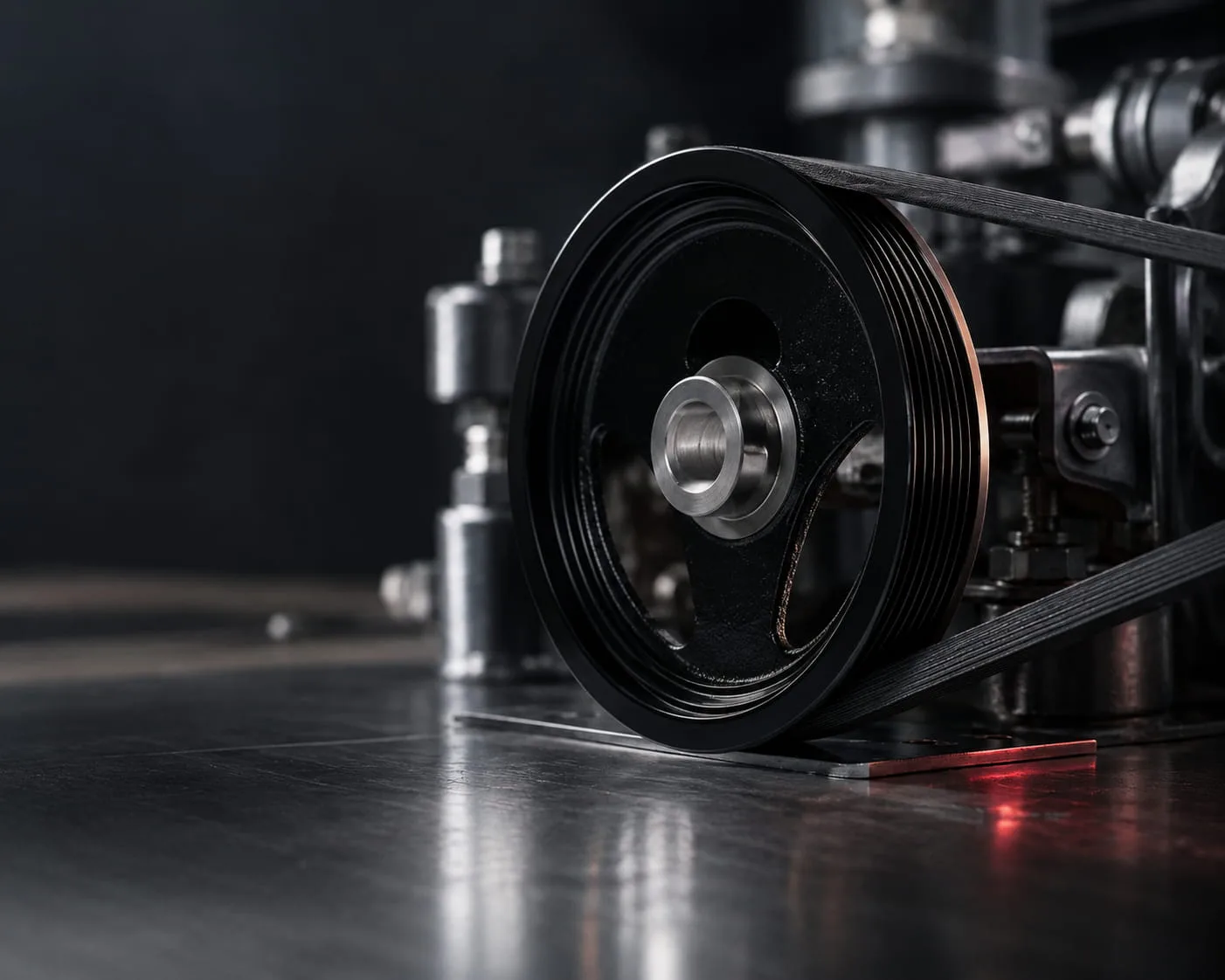
crankshaft pulley is an important automotive component located at the front of the engine and connected to the crankshaft. It transfers the engine’s rotational movement to auxiliary systems.
1. What Is a Crankshaft Pulley and What Does It Do?
A crankshaft pulley is an important automotive component located at the front of the engine and connected to the crankshaft. It transfers the engine’s rotational movement to auxiliary systems. Components such as the alternator, air-conditioning compressor, water pump, and power steering pump operate through the crankshaft pulley and belt system.
The crankshaft pulley is not only responsible for transmitting motion. Models equipped with a vibration-damping structure also help reduce torsional vibrations generated in the crankshaft while the engine is running. This contributes to smoother, quieter, and more efficient engine operation.
Main Functions of a Crankshaft Pulley
- Power transmission: Transfers rotational movement from the crankshaft to auxiliary engine equipment.
- Vibration control: Helps reduce torsional vibrations generated during engine operation.
- Belt system operation: Enables systems such as the alternator, air-conditioning compressor, and water pump to operate through the belt.
- Maintaining engine balance: Contributes to smoother and more stable engine operation.
2. The Importance of the Crankshaft Pulley in the Engine System
The crankshaft pulley is one of the critical components that directly affect the operating balance of the engine. Accurate dimensions, balanced rotation, and complete compatibility with the vehicle are essential for the healthy operation of the belt system.
Using a low-quality, damaged, or incompatible crankshaft pulley may cause irregular belt movement, vibration, noise, reduced performance in auxiliary equipment, and premature wear in surrounding engine components.
Advantages of a Properly Functioning Crankshaft Pulley
- Balanced operation: Helps keep engine vibrations under control.
- Reliable performance: Supports the regular operation of auxiliary engine systems.
- Long service life: Helps reduce wear on the belt and connected equipment.
- Quieter operation: Helps prevent irregular noises from the engine compartment.
3. Structure of a Crankshaft Pulley
Crankshaft pulleys may have different structural characteristics depending on the vehicle and engine type. While some models are manufactured entirely from metal, vibration-damping pulleys contain special rubber components between the metal sections.
The rubber damping section absorbs vibrations generated during engine operation and helps reduce the load transferred to the crankshaft and connected systems. For this reason, the durability of the rubber-to-metal bond directly affects the performance and service life of the crankshaft pulley.
Main Components of a Crankshaft Pulley
- Inner hub: The central section connected to the crankshaft.
- Outer pulley: The grooved outer surface on which the belt runs.
- Rubber damper: The vibration-reducing section located between the inner and outer metal components.
- Belt grooves: Ensure that the auxiliary drive belt moves correctly and securely.
4. Which Systems Does the Crankshaft Pulley Drive?
The crankshaft pulley transfers the mechanical energy produced by the engine to various auxiliary components through the belt system. The systems driven by the crankshaft pulley may vary depending on the vehicle model and engine configuration.
Main Systems Connected to the Crankshaft Pulley
- Alternator: Generates electrical power for the vehicle’s electrical system and charges the battery.
- Air-conditioning compressor: Enables the vehicle’s climate-control system to operate.
- Water pump: Helps circulate the engine coolant throughout the cooling system.
- Power steering pump: Supports easier operation of the steering system.
A failure in the crankshaft pulley may affect not only the pulley itself but also the auxiliary systems driven by the belt. Therefore, the pulley should be inspected regularly, and warning signs should not be ignored.
5. Why Is a High-Quality Crankshaft Pulley Important?
A crankshaft pulley operates continuously under high rotational speeds, heat, and vibration. Therefore, material quality, manufacturing precision, balance values, and vibration-damping capability are essential for reliable performance.
Features of a High-Quality Crankshaft Pulley
- Precise dimensions: It must provide complete compatibility with the vehicle and engine system.
- Balanced rotation: It should not wobble or move irregularly at high engine speeds.
- Durable materials: It must withstand heat, vibration, and long-term use.
- Strong rubber-to-metal bonding: The damping section should resist separation and cracking.
- Correct groove structure: It must allow the belt to move smoothly and securely.
Taifun crankshaft pulleys provide reliable solutions for the global aftermarket with a broad product range developed for different vehicle brands and groups. All production processes for more than 250 products are carried out in-house, with design, machining, assembly, and quality-control stages managed meticulously.
Developed through modern manufacturing technologies, strong engineering capabilities, and long-established automotive expertise, Taifun crankshaft pulleys stand out with their precise fit, durability, vibration control, and reliable performance.