
 Türkçe
  English
  Русский
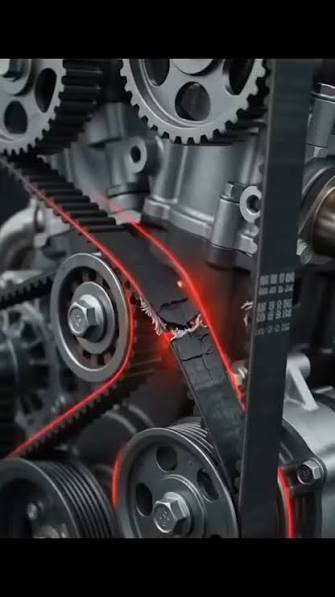
A crankshaft pulley is an important component that transfers the engine’s rotational movement to auxiliary equipment and helps control engine vibrations.
1. How to Choose the Right Crankshaft Pulley
A crankshaft pulley is an important component that transfers the engine’s rotational movement to auxiliary equipment and helps control engine vibrations. For this reason, crankshaft pulley selection should not be based only on the product’s appearance or diameter.
Even within the same vehicle model, different crankshaft pulleys may be used depending on the production year, engine type, engine code, and equipment specifications. A product that is not fully compatible with the vehicle may cause installation problems, belt misalignment, vibration, noise, and reduced auxiliary-system performance.
Information to Check When Selecting the Correct Product
- Vehicle make and model.
- Vehicle production year.
- Engine displacement and engine type.
- Engine code.
- Original equipment or OE part number.
- Technical dimensions and groove configuration of the pulley.
2. Why Are Vehicle and Engine Details Important?
Vehicle information is the main reference point when identifying the correct crankshaft pulley. In some cases, the make and model alone may not be sufficient. Because the same vehicle model may be produced with different engine options, the engine code and production year must also be checked.
The engine code is one of the most important details identifying the engine family and technical configuration of the vehicle. It helps prevent confusion between products that may look similar but have different dimensions or mounting characteristics.
Vehicle Details That Should Be Checked
- Make: The vehicle manufacturer must be identified correctly.
- Model: The exact model and body version should be confirmed.
- Production year: Part differences caused by model changes should be identified.
- Engine code: The correct engine and product match should be established.
- Vehicle identification number: It may be used when precise part verification is required.
3. Selecting a Crankshaft Pulley by OE Number
An OE number is the original equipment reference number assigned to a component by the vehicle manufacturer. When selecting a crankshaft pulley, checking the number on the removed part or the reference listed in the manufacturer’s parts catalogue is essential for correct identification.
When choosing an aftermarket crankshaft pulley, comparing the product with the OE number reduces the risk of selecting an incompatible component. However, one product may correspond to several OE numbers, and these references may be updated over time.
Advantages of Checking the OE Number
- Makes correct product identification easier.
- Prevents confusion between visually similar components.
- Provides more reliable mounting compatibility.
- Speeds up product research and ordering.
- Allows different brand references to be compared.
4. How Should Technical Dimensions and Groove Configuration Be Checked?
The outer diameter, inner diameter, width, mounting hole, number of grooves, and groove profile directly affect crankshaft pulley compatibility. Two pulleys that look almost identical may have dimensional differences of only a few millimetres.
A product with incorrect dimensions or groove configuration may prevent the belt from seating properly, cause misalignment, and lead to premature wear in the belt system. Technical specifications should therefore be verified through precise measurements and product catalogues rather than visual comparison alone.
Technical Features That Should Be Checked
- Outer diameter: The pulley’s total external measurement.
- Inner diameter: It must fit the crankshaft or central mounting section.
- Total width: It must be compatible with the available engine mounting area.
- Number of grooves: It must match the number of ribs on the belt.
- Groove profile: It must be fully compatible with the belt type.
- Mounting design: Holes, keyways, and centring features must be correct.
5. The Importance of Material and Manufacturing Quality
A crankshaft pulley operates under high rotational speeds, heat, vibration, and mechanical loads whenever the engine is running. Therefore, the quality of the metal, rubber component, and bond between these materials is extremely important.
Incorrectly managed manufacturing tolerances or insufficient balancing may cause the pulley to rotate irregularly at high speeds. This can increase engine vibrations and lead to premature wear in the belt system.
Features of a High-Quality Crankshaft Pulley
- It should have precise and consistent manufacturing dimensions.
- It should rotate smoothly and evenly at high engine speeds.
- The rubber-to-metal bond should be strong.
- It should resist heat, vibration, and environmental conditions.
- The belt grooves should be machined accurately and smoothly.
- It should undergo the necessary quality inspections after production.
6. Why Should the Rubber Damping Structure Be Checked?
Vibration-damping crankshaft pulleys contain a special rubber component between the inner and outer metal sections. This component helps reduce torsional vibrations generated during engine operation and supports the protection of connected components.
If the rubber is low quality, poorly bonded to the metal surfaces, or manufactured with an unsuitable hardness level, the pulley may not perform correctly. Therefore, not only the metal structure but also the quality of the damping component should be evaluated.
Features Required in the Rubber Section
- Strong and uniform bonding to metal surfaces.
- Resistance to cracking and separation.
- Resistance to engine operating temperatures.
- Resistance to oil and environmental effects.
- Appropriate hardness and flexibility for vibration damping.
7. Mounting Compatibility and Professional Installation
Even when the correct crankshaft pulley has been selected, incorrect installation may negatively affect the product’s performance and service life. The mounting surfaces should be clean, the pulley should be centred correctly, and the bolts should be tightened to the specified torque values.
During crankshaft pulley replacement, the auxiliary drive belt, tensioner pulley, and other connected components should also be inspected. Continuing to use a worn belt or faulty tensioning system with a new crankshaft pulley may cause premature damage to the new product.
Points to Consider During Installation
- The pulley mounting surfaces should be cleaned.
- The product should be correctly centred on the crankshaft.
- The mounting bolts should be tightened to the correct torque.
- The belt and tensioner system should be inspected together.
- The pulley’s rotational balance should be checked after installation.
- Correct belt alignment should be confirmed.
8. Choosing a Reliable Crankshaft Pulley
When selecting a crankshaft pulley, not only price but also product compatibility, manufacturing quality, material durability, and the manufacturer’s technical capabilities should be considered. A reliable product contributes to balanced engine operation and the protection of belt-driven auxiliary systems.
Taifun offers more than 250 crankshaft pulley options for different vehicle makes and groups. Because all production processes are carried out in-house, the design, machining, rubber-to-metal bonding, assembly, and quality-control stages are managed meticulously.
A crankshaft pulley correctly matched to the vehicle and engine, manufactured to precise dimensions, and made from high-quality materials provides important advantages in terms of long service life, reliable performance, and balanced engine operation.